SkilLab framework
4D Filter: distinguishing a real corporate educational game from a cheap one
Decision · Difficulty · Debrief · Data
The 4D Filter (Decision · Difficulty · Debrief · Data) is a SkilLab framework that separates corporate educational games producing measurable learning from games that merely decorate training. A game that fails any of the four dimensions is not educational.
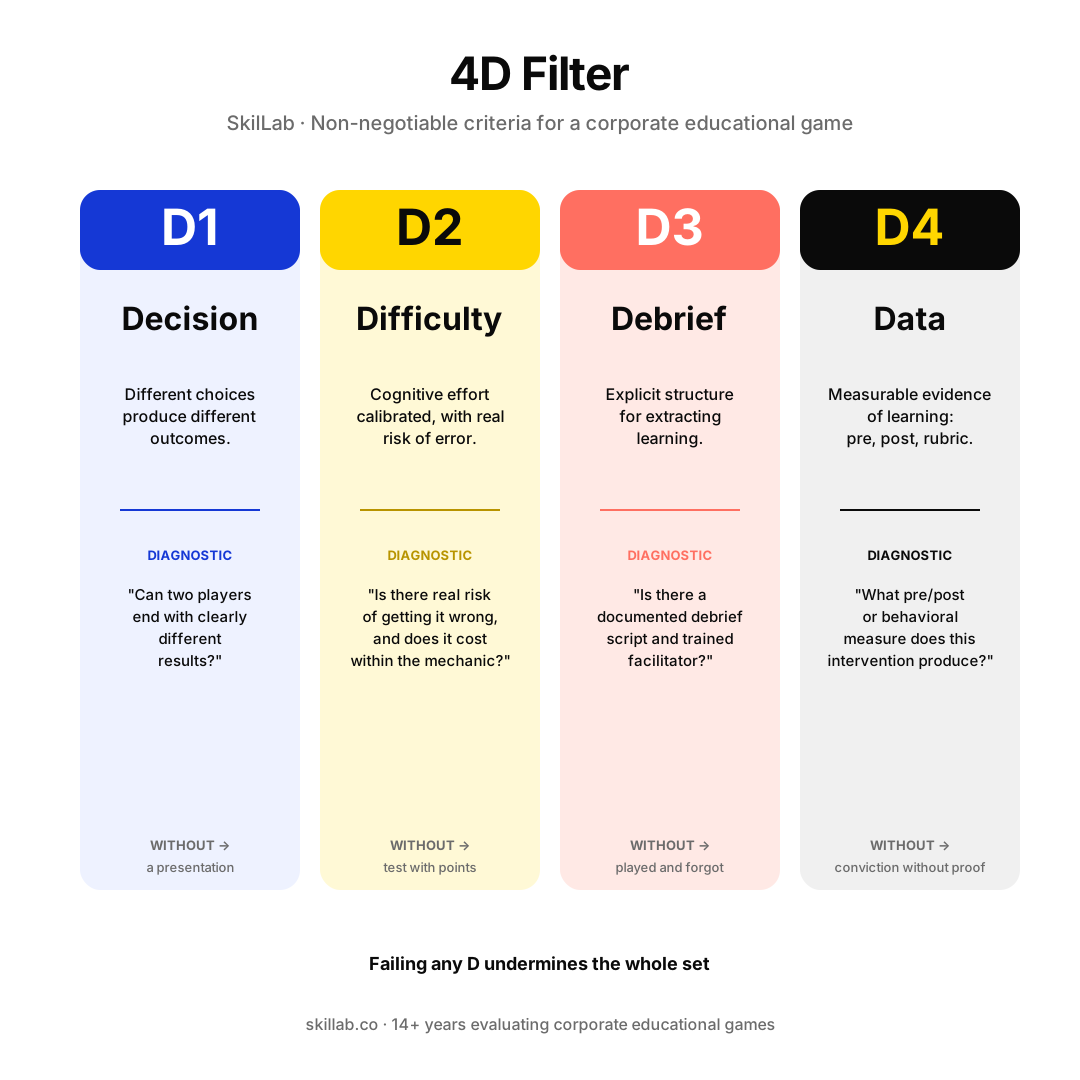
The four dimensions
Decision. The player chooses among alternatives that produce different outcomes. Without real choice it is a presentation, not a game. Diagnostic question: “can two people playing this end with different results?”.
Difficulty. The game demands cognitive, physical, or emotional effort from the player. Without difficulty there is no learning, only entertainment. Diagnostic question: “can the median player lose?”.
Debrief. The session ends with structured extraction of learning, not with applause. Without a debrief the game produces episodic memory that fades. Diagnostic question: “at the end, does the player articulate what they learned in one sentence related to the business objective?”.
Data. The game captures measurable data about the player’s behavior, decision, or performance. Without data there is no way to know whether transfer happened. Diagnostic question: “three months later, can we correlate participation with observable change?”.
How to apply
Use the 4D Filter as a binary screen before approving any game for a corporate program. If a dimension fails, request a redesign or discard. Games without Decision are presentations; without Difficulty they are entertainment; without Debrief they are forgetting; without Data they are faith.
Most games sold to the Brazilian corporate market fail on Debrief or Data — these are the two most common redesign targets when we work with clients who have already bought the material.
Cases that apply the 4D
Intel Super Seller meets all four dimensions: 82 cards with real Decision (component selection), Difficulty calibrated across three levels, Debrief replaced by Performance Points as the unifying metric for retail-channel context, and Data captured by the scoring mechanic itself.
GNDI Waste + Safety applies the 4D annually, capturing data from 50,000 employees and using structured Debrief led by local managers.
Related posts
- Corporate educational games: real criteria, the original post that introduces the 4D Filter.
- PEAR, the selection screen applied before the 4D Filter.
When to use
- Evaluate a vendor proposal for a corporate game (physical or digital) before buying.
- Decide whether an internally designed game is ready to scale.
- Audit existing gamified training that is not delivering the expected result.
When NOT to use
- Short playful activities without a specific learning objective. Use PEAR instead.
- Multi-round strategic simulations. Use the 4Q Selector to choose the right simulator.