SkilLab framework
Channel Game Loop: replicable game for reseller channels (Intel Super Seller case)
Simplified vocabulary · Self-explanatory mechanic · Unified metric
Channel Game Loop is a SkilLab framework to design enablement games that run at reseller-channel scale without a human facilitator present. The three elements must be simultaneously present for the game to close the loop and replicate without loss.
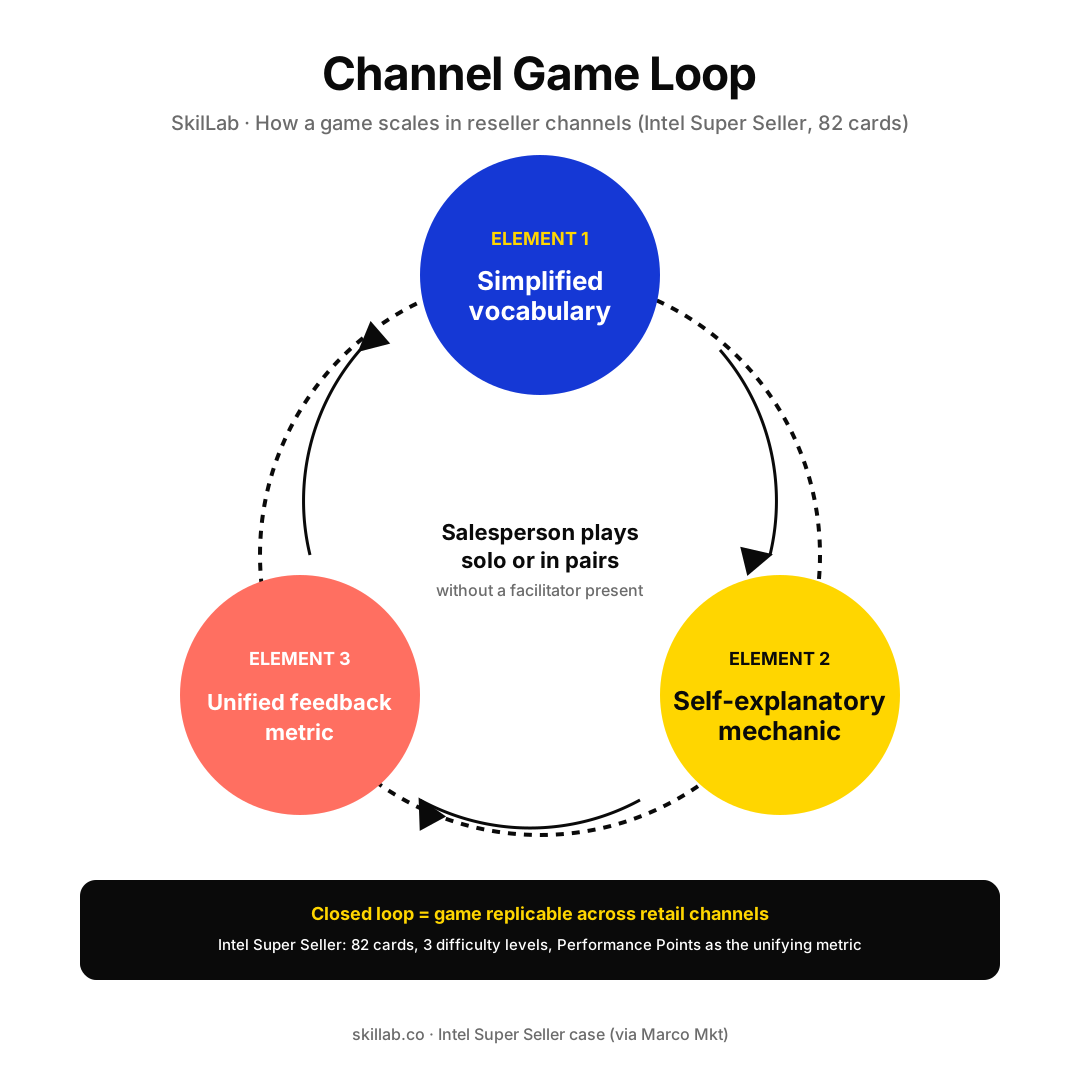
The three elements
Simplified vocabulary. Language from the front line, not from headquarters. Intel Super Seller replaces Intel’s technical terms with retail-salesperson language: “this is the brain”, “this is the working memory”. Without simplification, the salesperson abandons the game in round two.
Self-explanatory mechanic. Rules visible in the game’s own structure, no manual to read. The player understands what to do by picking up the cards. A 20-page manual kills the loop before it starts.
Unified feedback metric. Replaces the facilitator. Intel Super Seller uses Performance Points: each computer configuration built generates a number, and the player immediately knows whether they hit the target profile. Without a single metric, feedback requires a human and the game does not scale.
How to apply
Design Channel Game Loop thinking of the worst use case: salesperson alone in the store during slow hours, no trainer. If the game works there, it scales. If it requires a facilitator, the program demands expensive logistics that erase the training gain.
Intel Super Seller reached three difficulty levels (easy, intermediate, hard) and EN and ES versions precisely because the three elements closed the loop and expansion paid for itself.
Cases that apply Channel Game Loop
Intel Super Seller case study: 82 cards, 3 play modes, Performance Points as the single metric, expansion to EN/ES after success in PT.
Related posts
- SSS, complementary framework for sector diagnosis (retail is a sector where Channel Game Loop is easy to justify).
- 4D Filter, quality screen for the game design.
When to use
- Brand that must train hundreds to thousands of resellers across channel.
- Technical product training that must run without an instructor present.
- Channel-enablement programs with high turnover at the front line.
When NOT to use
- Executive training with a facilitator present.
- Programs where the objective is deep human debrief, not auto-correcting scoring.