SkilLab framework
EXEC Drift Test: the 4 drifts between strategy and execution (Celemi Performance)
Cognitive · Political · Resource · Context
EXEC Drift Test (Cognitive · Political · Resource · Context) is a SkilLab framework to classify drifts between formulated strategy and executed strategy. Each drift type demands a distinct intervention: translation, politics, allocation, or repactuation. Confusing the type is treating the wrong symptom.
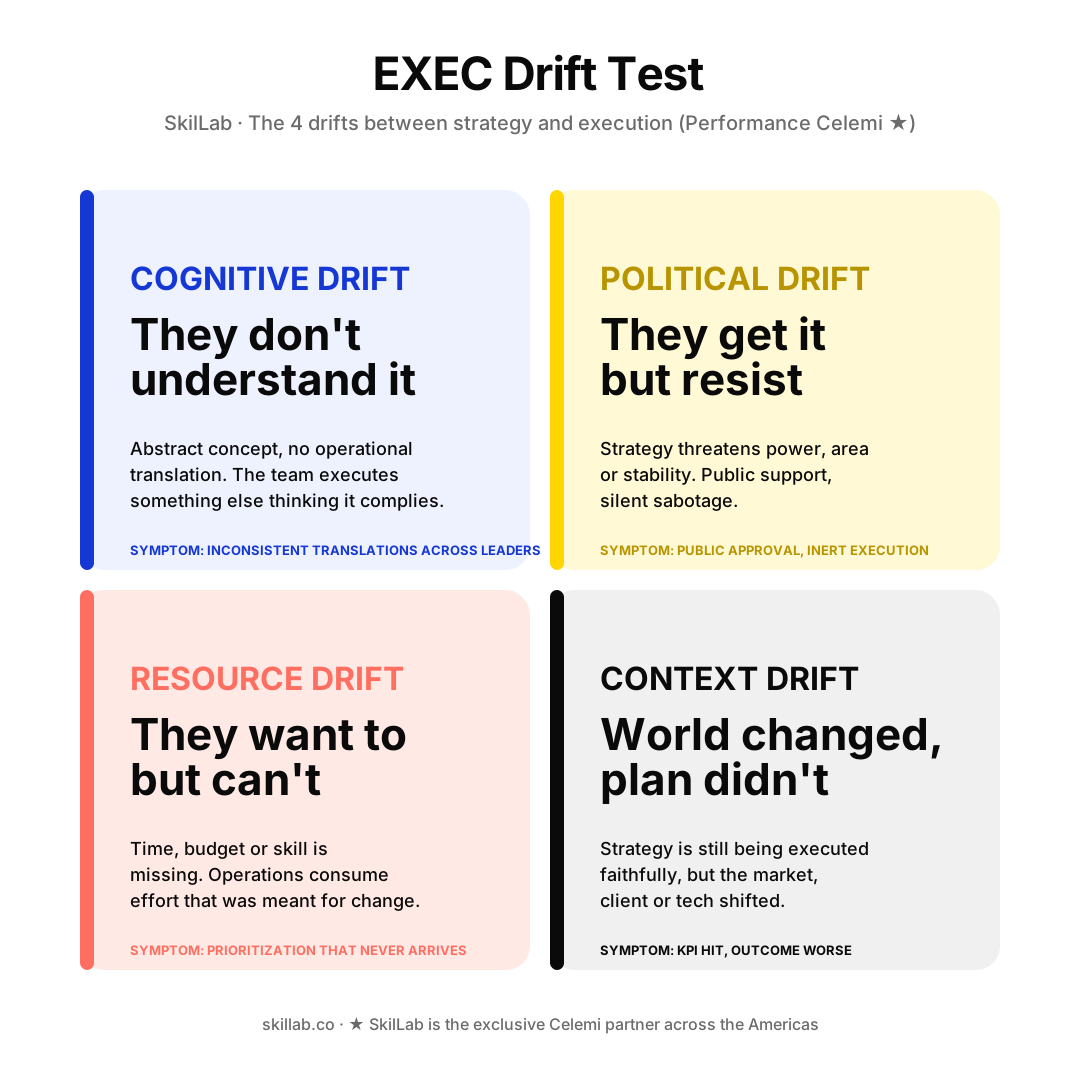
The four drift types
Cognitive. The team does not understand the strategy. Abstract concept without operational translation, or inconsistent translation across leaders. Symptom: each manager tells a different version in interview. Intervention: structured cascade with tested key messages.
Political. The team understands but resists. Strategy threatens power, area, or stability. Symptom: high public approval, inert execution. Intervention: explicit political negotiation with losers, incentive redesign.
Resource. The team wants to but cannot. Time, budget or skill is missing. Symptom: prioritization that never reaches the top of the list. Intervention: real re-allocation, not rhetoric, with open trade-offs.
Context. The world changed, the plan did not. Strategy is still being executed faithfully, but the market, client or tech shifted. Symptom: KPI hit, outcome worse. Intervention: reopen the plan, do not accelerate execution.
How to apply
Use EXEC Drift Test in blind interviews with 12–15 key people (not just leaders). Code each answer into one of the four quadrants. The dominant quadrant is the primary drift type. The biggest managerial trap is treating Political drift as Cognitive drift: companies redo communication when the problem is power.
Celemi Performance is the experiential complement. The simulation produces drifts of all four types in a safe environment, and the debrief uses EXEC Drift Test as a map for the team to read its own experience.
Related posts
- Performance (Celemi), the original post.
- SHIFT Lens, complementary framework to diagnose organizational change.
When to use
- Post strategic-planning cycle, before initiating roll-out.
- Diagnostic in a stuck strategy-execution program.
- Evaluation 6–12 months after a strategy launched, to check for drift.
When NOT to use
- Strategy still in formulation, with no board decision yet.
- Tactical short-term initiatives where drift is normal and cheap.