SkilLab framework
Online Hackathon Choreography: 5 phases for a digital corporate hackathon (Instituto Embraer SID case)
Opening · Divergence · Convergence · Presentation · Anchoring
Online Hackathon Choreography is a SkilLab framework of five phases for a digital corporate hackathon. The choreography separates theatrical hackathons, ending in shelved PowerPoint, from hackathons that generate real projects, anchored in an execution roadmap. Phase 5 is where most fail.
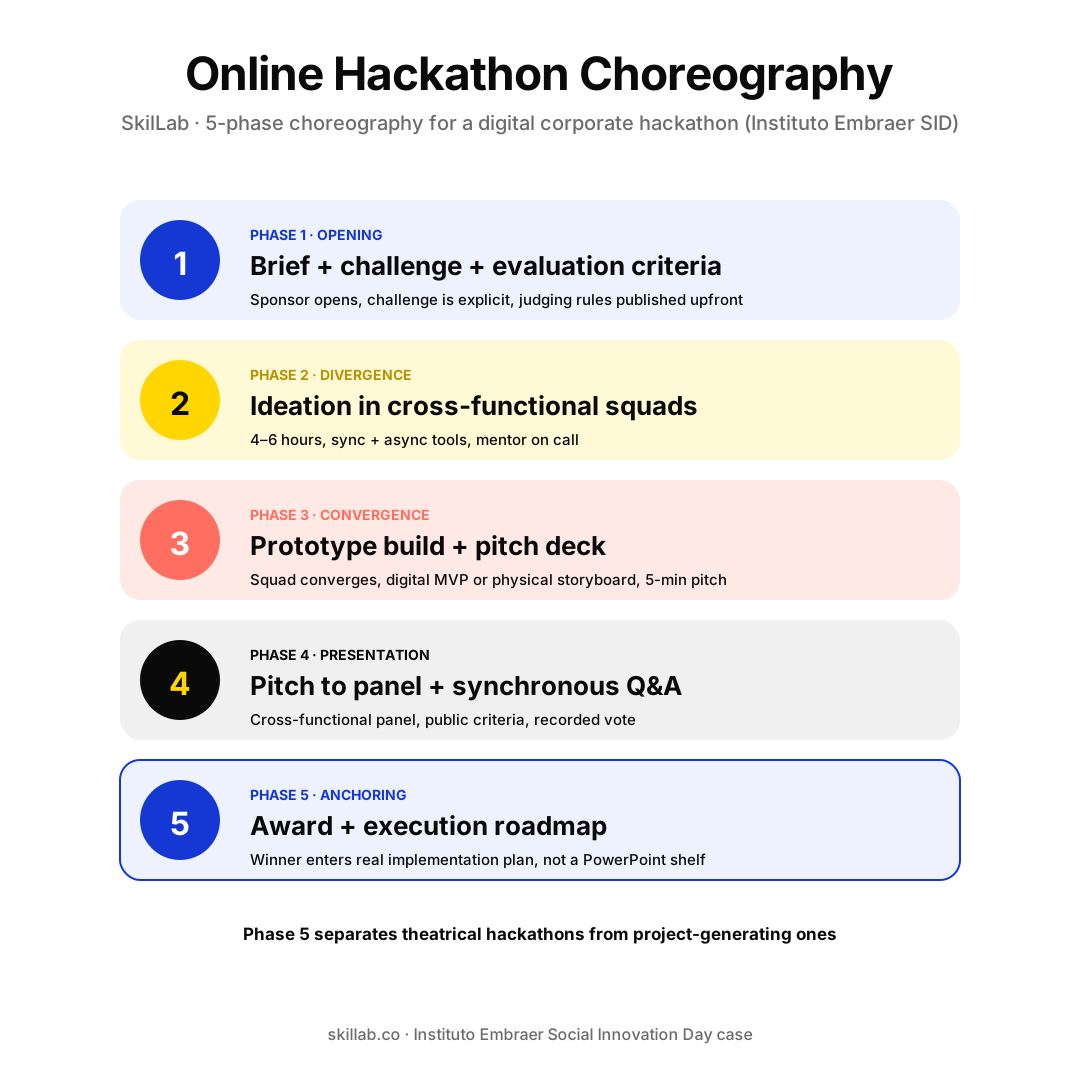
The five phases
Phase 1 · Opening. Sponsor opens, challenge is explicit, judging criteria published before ideation. Without published criteria, the team spends energy in the wrong direction.
Phase 2 · Divergence. 4–6 hours of ideation in cross-functional squads. Sync + async tools (Miro, breakout rooms, async docs), mentor on call. Mono-functional squad produces predictable ideas.
Phase 3 · Convergence. Squad converges into a prototype: digital MVP or photographed physical storyboard. 5-minute pitch deck. Convergence without a tight deadline becomes a meeting.
Phase 4 · Presentation. Pitch to a cross-functional panel + synchronous Q&A. Public criteria scale, recorded vote. A homogeneous panel rewards safe ideas.
Phase 5 · Anchoring. The winner enters a real implementation plan with sponsor, budget and deadline. Without Phase 5, the hackathon becomes motivational theatre.
How to apply
Online Hackathon Choreography requires a sponsor who signs Phase 5 before Phase 1. If the company lacks capacity or appetite to implement, run brainstorming, not a hackathon. The label “hackathon” creates expectations whose frustration costs dearly in future engagement.
Cases that apply Online Hackathon Choreography
Instituto Embraer SID case study: ESG online hackathon during the pandemic, with an anchoring phase that connected winning proposals to real partners.
Related posts
- REAL, to validate whether Phase 5 generates real transfer.
- SHIFT Lens, to prepare the change the winner will implement.
When to use
- Corporate-innovation program that must engage hundreds in digital format.
- ESG or social-impact week where the output must become a real project.
- Distributed multi-site ideation where in-person gathering is prohibitive.
When NOT to use
- Technical-formation workshops where ideation is not the objective.
- When the company cannot absorb the winner as a real project (becomes theatre).