SkilLab framework
PEAR: SkilLab's framework for evaluating digital gamified activities
Purpose · Engagement · Learning · Repeatability
PEAR (Purpose · Engagement · Learning · Repeatability) is a SkilLab framework for evaluating whether a digital gamified activity is worth a corporate remote team's investment of time. An activity that fails any of the four dimensions should be replaced with another.
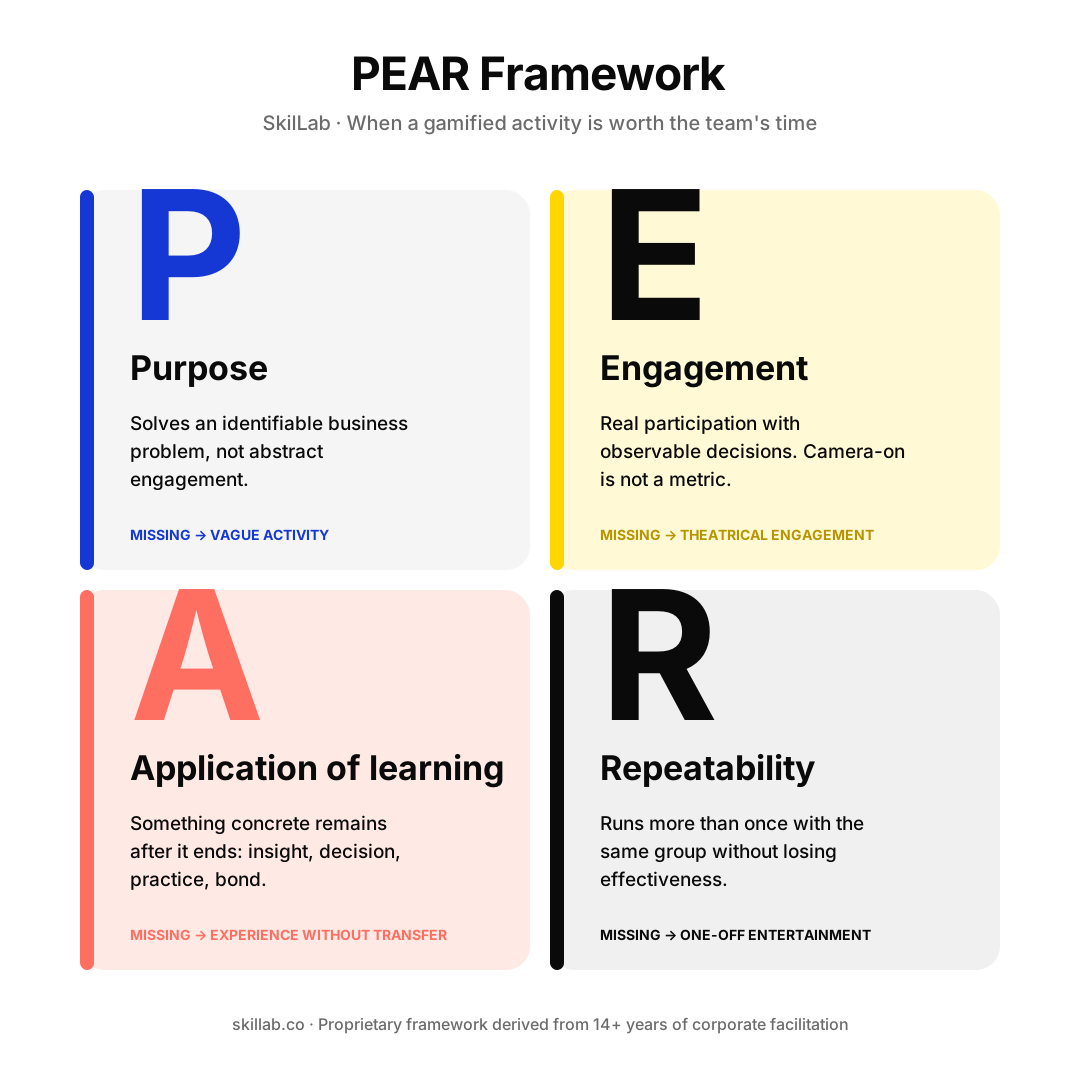
The four dimensions
Purpose is the first and most ignored. A gamified activity without a clear business purpose drifts into entertainment. Diagnostic question: “if this activity does not happen, which decision gets worse, which learning is lost, which problem remains?”. If nothing moves, cut the activity.
Engagement measures whether the design produces real active participation, not just presence. Diagnostic question: “does the median participant make a consequential choice, or merely observe?”. If they observe, it is a presentation, not a game.
Learning validates whether the participant leaves different from how they arrived. Diagnostic question: “in the debrief, can we articulate what each participant took away that is new?”. If the answer is generic (“it was fun”), no learning happened.
Repeatability measures whether the mechanic supports a second and third execution with the same team, or wears out quickly. Diagnostic question: “if we run this again in three months with the same team, is it still worth it?”. Repeatable activities anchor culture; one-off activities become memories that fade.
How to apply
Use PEAR as a binary filter before investment. If any of the four dimensions fails, redesign or discard. In long programs, reassess PEAR after each execution and adjust the weakest dimension before the next run.
PEAR is especially useful when the team has more demand for activities than time available — the typical situation for HR and L&D teams in Brazilian Fortune 500 companies. The pressure to deliver “let’s do something fun” without criteria fills the calendar with rituals that do not move KPIs.
Cases that apply PEAR
AOC VIES case study applied PEAR to design 10 weeks of challenges with three streamers: purpose (diversity in the gaming community), engagement (active participation in weekly challenges), learning (progressive narrative about structural sexism), repeatability (format adaptable for a future edition).
GNDI case study applies PEAR annually, recalibrating the Repeatability dimension to sustain 50,000 employees running the same game every 12 months without novelty loss.
Related posts
- Digital gamified activities: 15 examples for Brazilian remote teams, the original post that introduces PEAR.
- 4D Filter, the quality screen applied after PEAR selects the activity type.
When to use
- Evaluate gamification vendor proposals before committing budget.
- Audit existing weekly rituals to decide whether to keep or kill them.
- Design a new ritual for a team that has just gone remote or hybrid.
- Justify to leadership why a specific activity is worth the team's time.
When NOT to use
- Five-minute icebreakers before a short meeting. PEAR is over-engineering for this; any light dynamic will do.
- 1:1 executive coaching. Different criteria apply — focus on rapport and the leader's specific challenges, not collective engagement.
- Short technical training about a new tool. Use checklists and tutorials, not a gamification framework.