SkilLab framework
Train-the-Trainer Loop: design cascade to scale a formative program (SEBRAE-MT case)
Master design · Trainer cohort · Local roll-out · Feedback loop
Train-the-Trainer Loop is a SkilLab framework with four tiers (master design at the top, facilitator cohort, local roll-out, participants at the base) with feedback loops bubbling up to preserve fidelity as the program scales. Without the feedback loop, the cascade becomes a game of telephone.
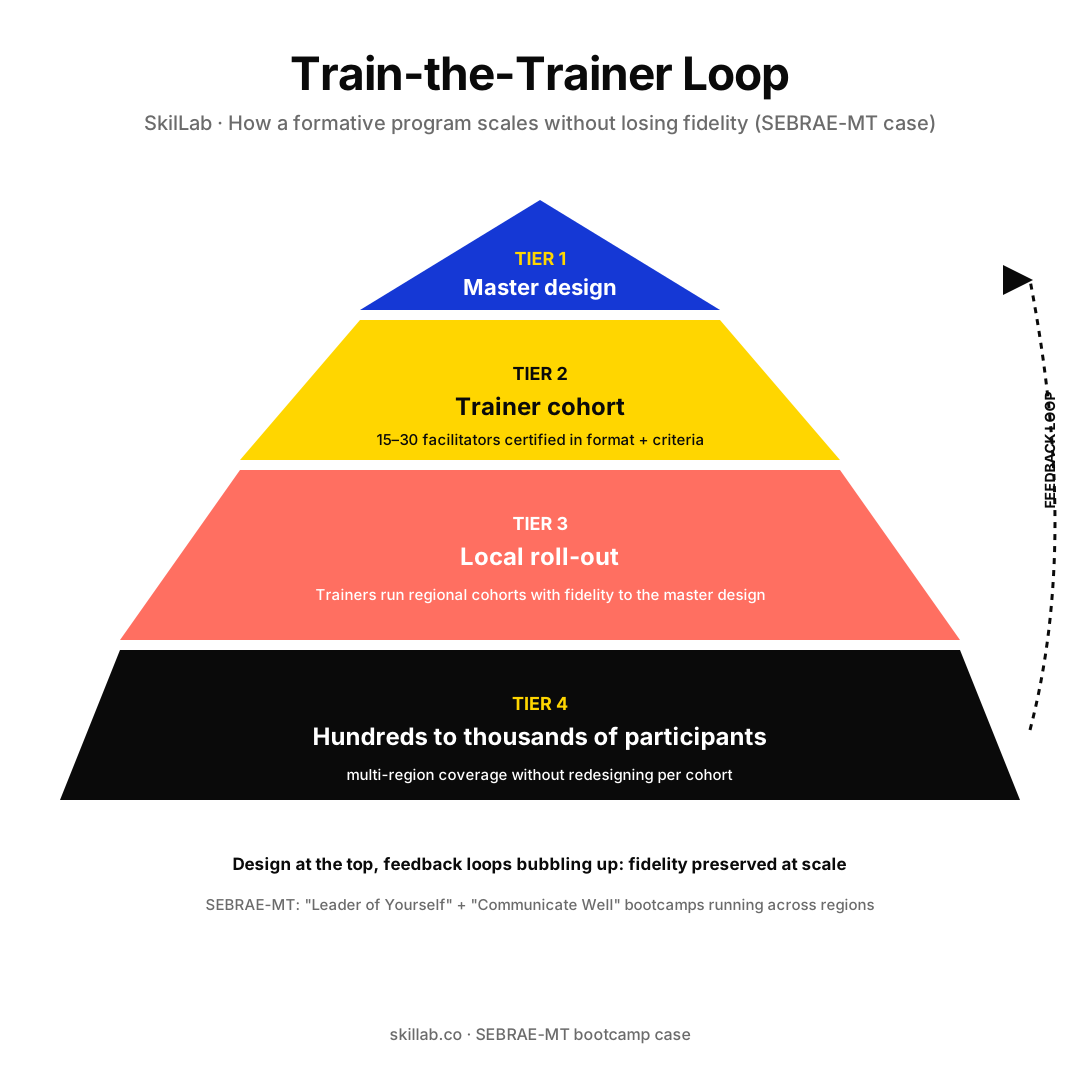
The four tiers and the loop
Tier 1 · Master design. An instructional designer (or duo) designs the program: structure, materials, exercises, evaluation criteria, standard debrief. This layer is expensive and dense.
Tier 2 · Trainer cohort. 15–30 facilitators certified in a formal 3–5-day training. Certification covers format and criteria, not only content: the trainer learns to react to the same participant the same way the master designer would.
Tier 3 · Local roll-out. Trainers run regional cohorts with fidelity to the master design. Local adaptation lives in contextual examples, not in the structure.
Tier 4 · Participants. Hundreds to thousands of people go through the program without redesigning for each cohort.
Feedback loop. The most frequently forgotten layer. Participants generate data that flows back to trainers; trainers generate data that flows back to the master designer. Without it, the program quietly decays in 18 months.
How to apply
Train-the-Trainer Loop demands concentrated investment in Tier 1 (master design) and continuous discipline in the feedback loop. Companies that cut cost on the master design and give the trainer total freedom discover in 2 years that they run ten different programs, not one program in ten places.
Cases that apply Train-the-Trainer Loop
SEBRAE-MT case study: “Leader of Yourself” + “Communicate Well” bootcamps running in different regions of Mato Grosso with certified facilitators.
Related posts
- REAL, to validate whether each tier meets transfer criteria.
- K4 Operational, for the measurement loop between tiers.
When to use
- Formative program that must run across multiple regions with fidelity.
- Organizations with a capillary base (state SEBRAEs, franchise networks, multinationals).
- When master design is expensive and direct roll-out does not scale.
When NOT to use
- Short executive programs with a single audience.
- When a master facilitator can be present at every cohort.