SkilLab framework
Annual Tool Loop: mandatory annual training without fatigue (GNDI case)
Anchor · Refresh · Cohort · Measurement
Annual Tool Loop is a SkilLab framework to sustain mandatory annual training without losing effectiveness. It structures the program across four quadrants of the 12-month cycle: compliance anchor, annual refresh, annual cohort, and measurement. Stable mechanic + variable theme is the formula key.
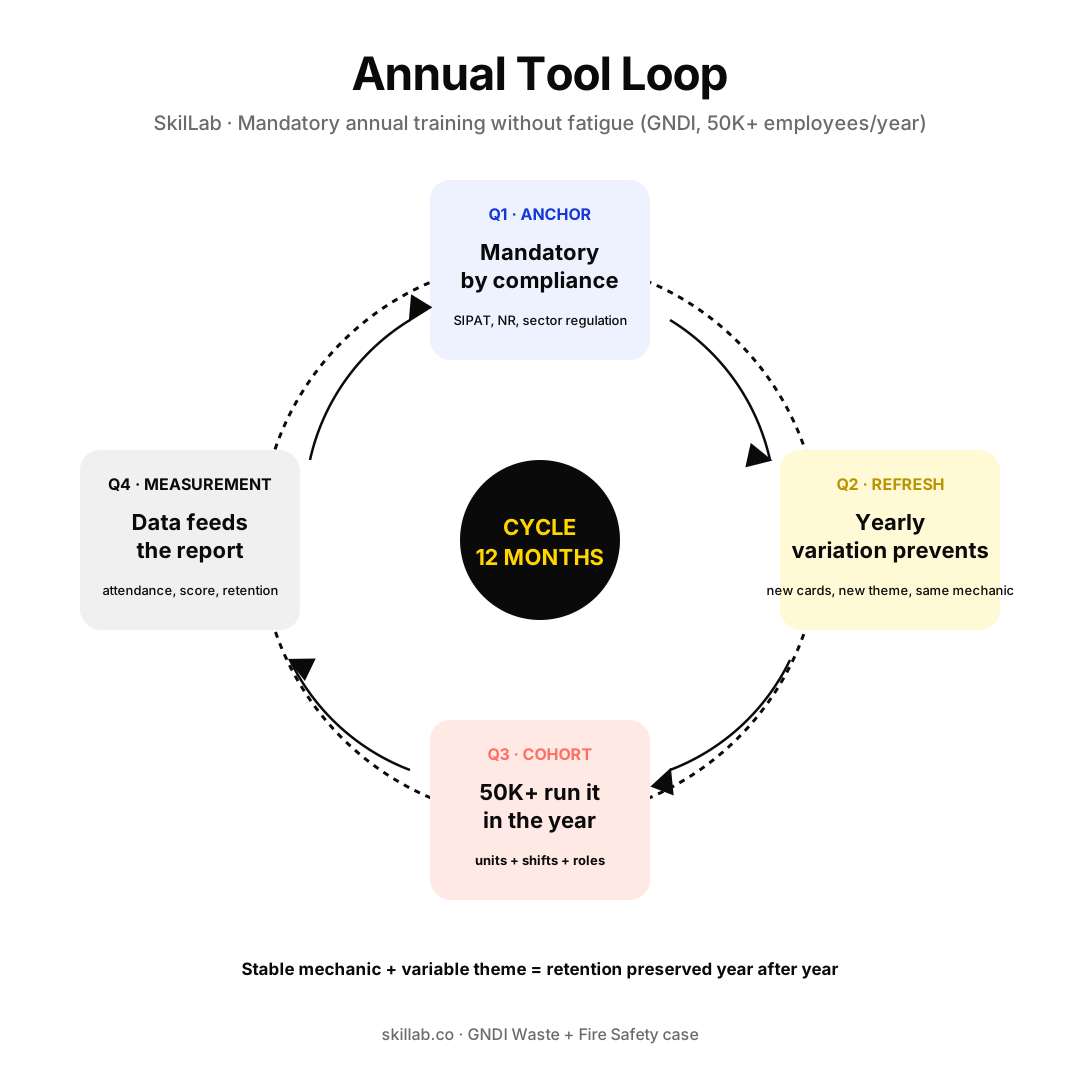
The four quadrants
Q1 · Anchor. Mandatory compliance gives the reason to exist. SIPAT, NR, sector regulation. The obligation does not negotiate, but the form does. Without an anchor, the program enters “is this worth it?” territory every year.
Q2 · Refresh. Annual variation sustains attention. GNDI keeps the game mechanic (physical cards + group dynamics) and rotates theme (Waste one year, Fire Safety the next). Stable mechanic + variable theme avoids fatigue.
Q3 · Cohort. 50K employees run the program in a 12-month cycle. Scale is the metric: it covers all units, all shifts, all relevant roles. A fragmented cohort kills the ritual effect.
Q4 · Measurement. Captured data goes into the compliance report the company already produces. Capture piggybacks on the existing flow, not on a parallel spreadsheet.
How to apply
Annual Tool Loop only makes sense when the four quadrants rotate together. Company with compliance anchor + no refresh = fatigue in 2 years. Company with large cohort + no measurement = no evidence to justify investment.
GNDI is a reference because it integrated all four quadrants from design. Data capture goes directly to the annual report that Safety & Environment already produces, which made the program self-sustaining.
Cases that apply Annual Tool Loop
GNDI case study: 50K+ employees trained annually in a Waste + Fire Safety program, with annual thematic refresh.
Related posts
- 4D Filter, quality screen for the game used in the ritual.
- K4 Operational, to measure the program in Kirkpatrick levels.
When to use
- Annual compliance training with a broad base (SIPAT, NR, sector regulation).
- Safety or ESG areas with recurring training obligation.
- Critical-knowledge retention programs in high-turnover settings.
When NOT to use
- One-off training without recurring annual rhythm.
- Executive programs where repeatability is not the criterion.