SkilLab framework
BAR Map: linking operational decisions to balance sheet (Apples & Oranges Celemi)
Balance · Application · Result
BAR Map (Balance · Application · Result) is a SkilLab framework to make the connection between operational decisions and financial impact visible, used as a reinforcement tool for Apples & Oranges (Celemi). The team draws the path B → A → R for each decision until it becomes automatic.
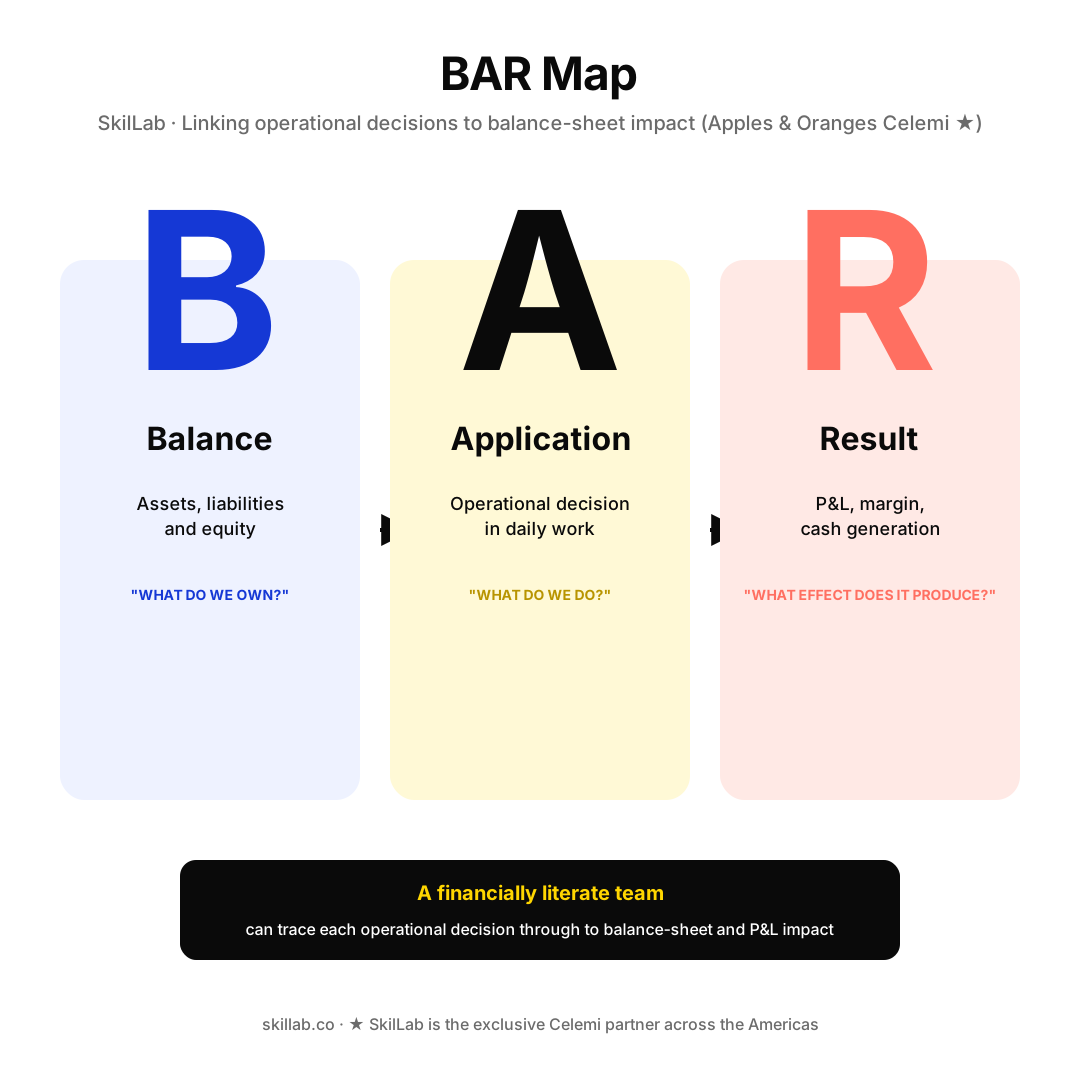
The three dimensions
Balance. What the company holds in assets, liabilities and equity at a moment in time. A snapshot, not a film. Diagnostic question: “before the decision, what is on the balance sheet?”.
Application. The concrete operational decision made in daily work, with its own unit of measure: buy a machine, hire a person, open a market, extend payment terms. Diagnostic question: “what is moving?”.
Result. The effect that decision produces on the P&L, on margin and on cash generation, across distinct time windows. Diagnostic question: “which number moves, by how much, in what timeframe?”.
How to apply
Use BAR as a repeated task: every operational decision discussed in a meeting, the team draws B → A → R on the whiteboard. In 3 to 4 sessions, the path becomes automatic and the team starts anticipating financial outcome before approving the decision.
The pairing with Apples & Oranges (Celemi) is direct. The simulation gives a full-cycle experience in one day; the BAR Map is the reinforcement tool that keeps the learning alive in real meetings afterwards.
Related posts
- Apples & Oranges (Celemi), the original simulator post.
- K4 Operational, to measure whether the financial literacy moved a KPI.
When to use
- Operational managers newly promoted to roles with P&L responsibility.
- Technical teams that need to justify investment in financial language.
- Leadership-pipeline programs where financial literacy is a recurring gap.
When NOT to use
- Professionals already fluent in financial statements — use strategic simulations.
- Short concept-only training, BAR demands repeated practice.