SkilLab framework
REMOTE Cadence: remote-leadership program that lasts
Rituals · Embedding · Modeling · Observation · Time · Evolution
REMOTE Cadence (Rituals · Embedding · Modeling · Observation · Time · Evolution) is a SkilLab six-dimension framework for remote and hybrid-leadership programs that turns one-off capability building into the operating system of the team. The six dimensions must be present in the design; missing any of them is a predictable source of decay.
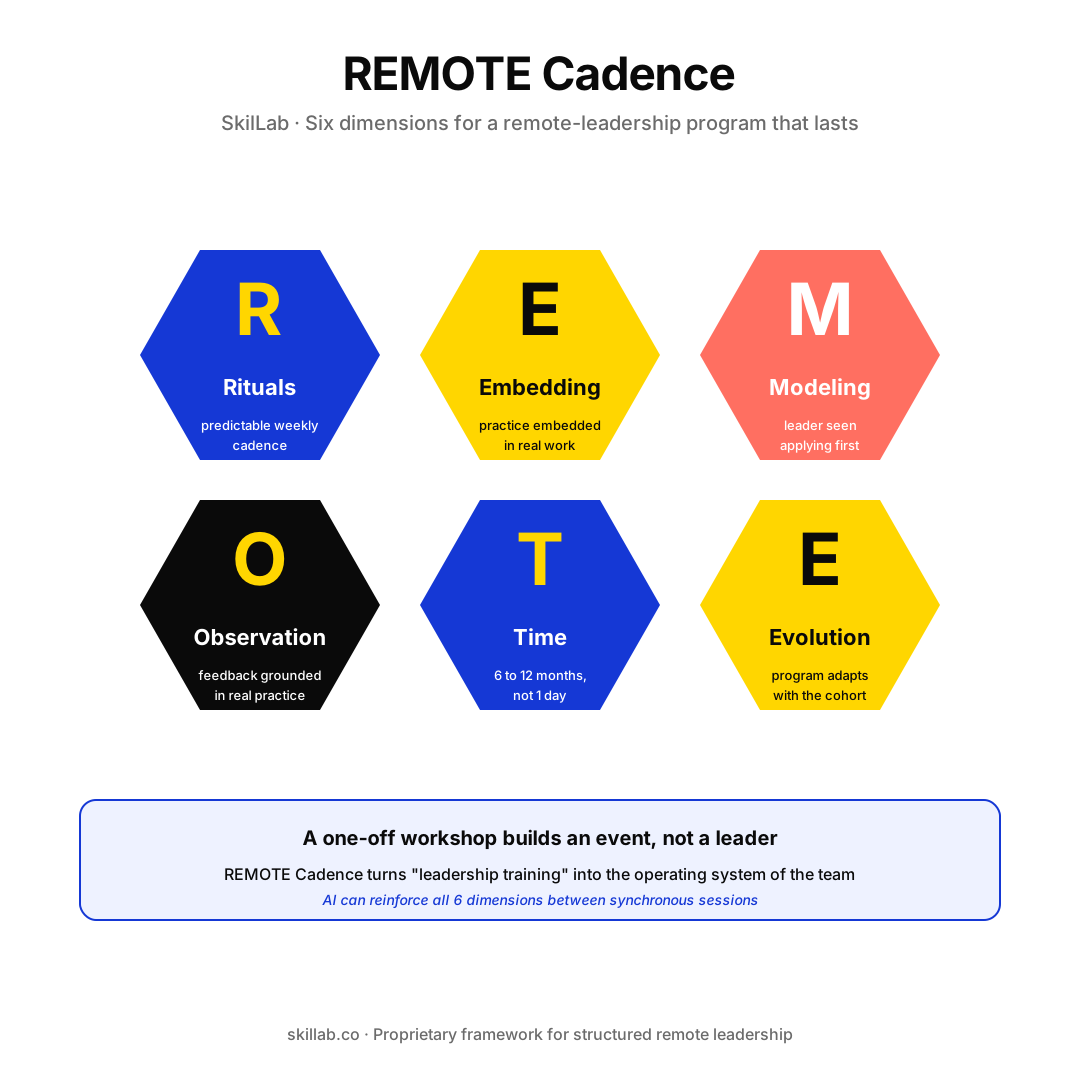
The six dimensions
Rituals. Predictable weekly cadence of meetings, check-ins and practices. Remote leadership without ritual becomes reactive availability. Question: “what rituals can the team list from memory?”.
Embedding. Leadership practice is embedded in real work, not in an isolated parallel session. The leader applies the learning to a real decision, not to a theoretical exercise.
Modeling. The senior leader shows up applying first what is expected from direct reports. Without modeling, the program becomes top-down direction silently rejected.
Observation. Feedback grounded in real observed practice, not in self-assessment. Can be sampling of recorded meetings, role-play, structured peer review.
Time. 6 to 12 months, not 1 day. Remote leadership is a skill, not an event. A 1-day program builds awareness, not capability.
Evolution. The program adapts with the cohort. Adjustments based on captured data, not on sponsor opinion. Without evolution, the program quietly decays.
How to apply
Use REMOTE Cadence as a screen before approving any remote-leadership program. If the proposal focuses only on content (modules, frameworks, tools) and ignores cadence, embedding and modeling, decline: you are buying a workshop, not a program.
AI can reinforce several dimensions between synchronous sessions: Ritual reminders, Observation prompts, Embedding logs. Pairing with the Claude Cowork workshop amplifies the program.
Related posts
- Remote leadership: structured program vs events, the original post.
- Claude Cowork workshop, for the AI layer sustaining the cadence.
- K4 Operational, to measure whether the program moved a KPI.
When to use
- Company with 30%+ of its workforce in permanent remote or hybrid format.
- Leadership-pipeline program in a distributed organization.
- Repositioning a leadership program that has been an isolated event.
When NOT to use
- 100% in-person companies where remote leadership is not a real demand.
- One-off workshops driven by a specific, short demand.