SkilLab framework
VALUE Stack: where service firms lose margin (Celemi Tango)
Vendor · Application · Logic · Utilization · Evidence
VALUE Stack (Vendor · Application · Logic · Utilization · Evidence) is a SkilLab five-layer framework to diagnose service and knowledge-economy firms: consulting, law, agency, software house, education. The top three tiers are visible to the client; the bottom two are where margin disappears unnoticed.
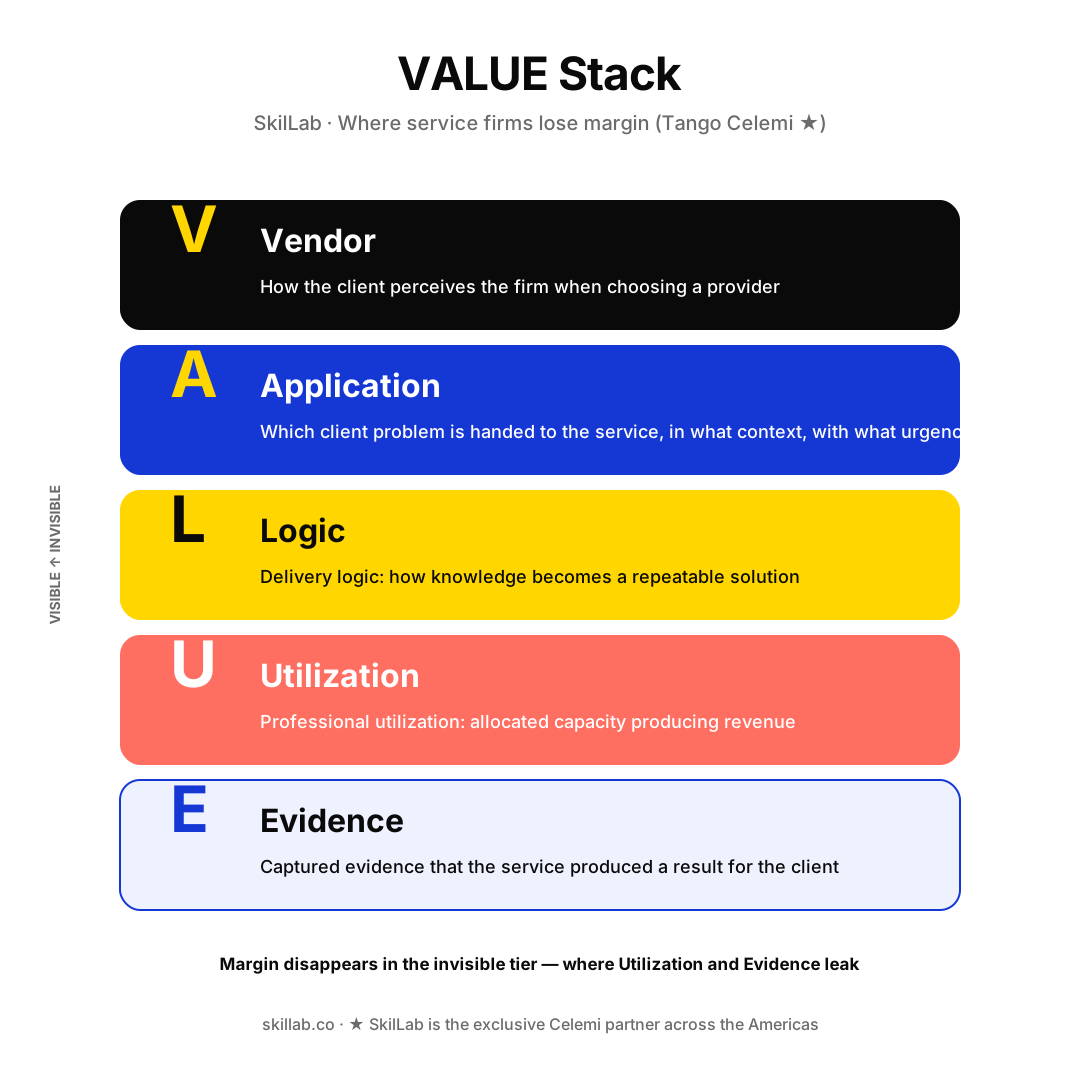
The five layers
Vendor. How the client perceives the firm before contracting. Brand, authority, reputation. Most visible layer; most invested in.
Application. Which problem the client hands to the service, in what context, with what urgency. Visible to the client because they articulate the demand.
Logic. Internal delivery logic: how knowledge becomes a repeatable solution. Partially visible, depending on how productized the delivery is.
Utilization. Allocated-professional utilization. Margin starts to leak here: under-allocated professional is silent loss; over-allocated professional is quality drop. Invisible to the client.
Evidence. Captured evidence that the service produced a result. Where most service firms fail, because evidence capture is work that does not bill. Invisible to the client until the next sales follow-up.
How to apply
Apply VALUE Stack as a diagnostic in 3 sessions: one to map each layer with internal data, another to identify the layer with biggest leakage, another to design corrections. Service firms that grew fast typically leak in Utilization (untracked) and Evidence (uncaptured), because they grew in their heads, not in the system.
Celemi Tango is the experiential complement: a simulation where service-firm teams run the 5 layers across 4–5 rounds and see in the financials the effect of each decision.
Related posts
- Tango (Celemi), the original simulator post.
- BAR Map, complementary framework to link decision to balance sheet.
When to use
- Service firms growing in revenue but not in margin.
- Consulting, law-firm or agency leaders diagnosing inefficiency.
- Strategy-execution programs in the knowledge-economy sector.
When NOT to use
- Industrial firms with a dominant operational chain.
- Teams that have not yet defined their value proposition to clients.